Frances Foster is a Montreal-based visual artist. Together with local residents, she led a fight for a park in the Marconi-Alexandra neighbourhood in 2013. She was almost evicted in 2022. This interview is dedicated to those who help make those special places in cities. This post is part of my Wild Things newsletter. Subscribe here.
1) Why did you want to have a park?
That’s a complicated question. Our neighbourhood, Marconi-Alexandra, or MileEx, the new moniker given in 2012 was undergoing deep gentrification starting in the early 2000’s. A new university campus, called MIL, was on the horizon –this huge project was spearheaded by the University of Montreal and all three levels of government in order to develop a ‘university community’ with condos, social-housing, and student housing. The impact on the surrounding neighbourhoods, ours included, meant an influx of capital, revitalization spanning years of intense construction and urban redevelopment. Marconi-Alexandra was a small community, essentially an island separated once-upon-a-time by the railway. To access the other side, one had to use a dangerous underpass for years. With the removal of the tracks in the early 1990’s the city envisioned a rebirth for a very poor, highly industrialized sector of town.
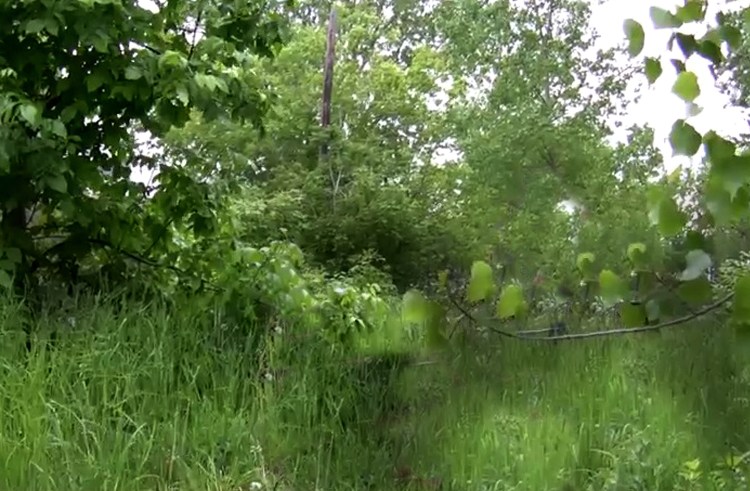
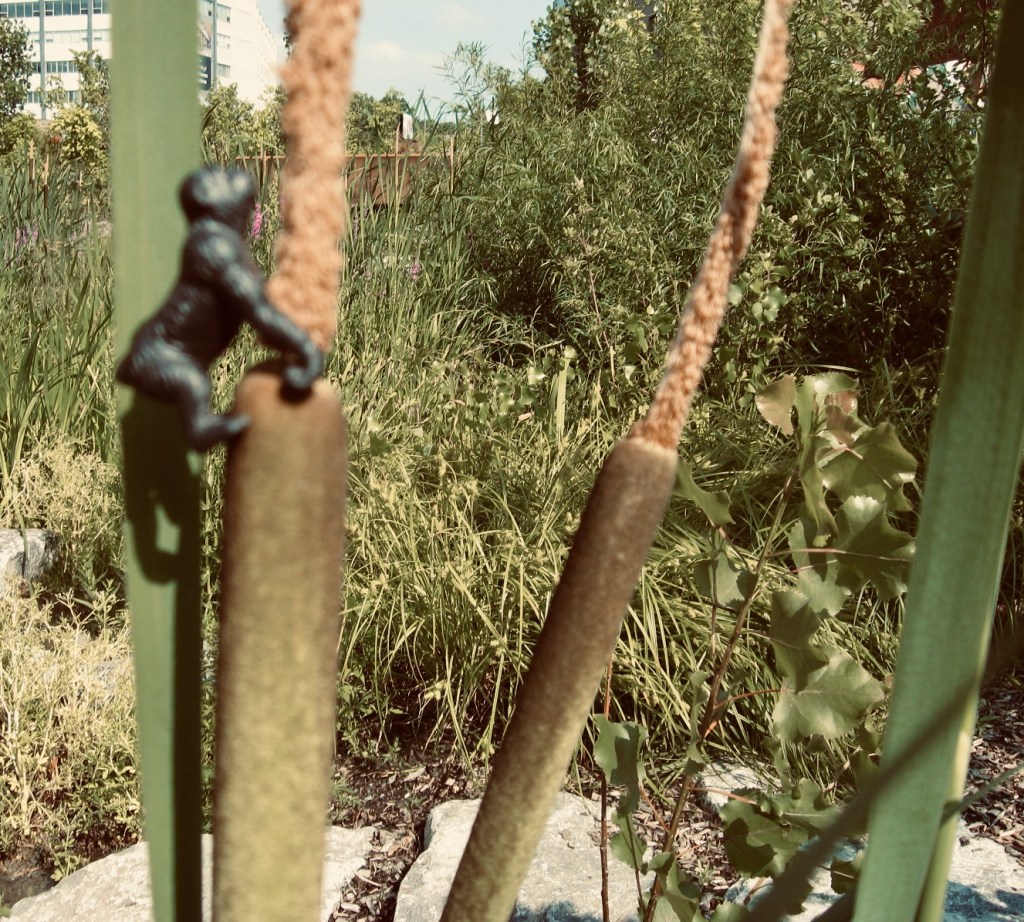
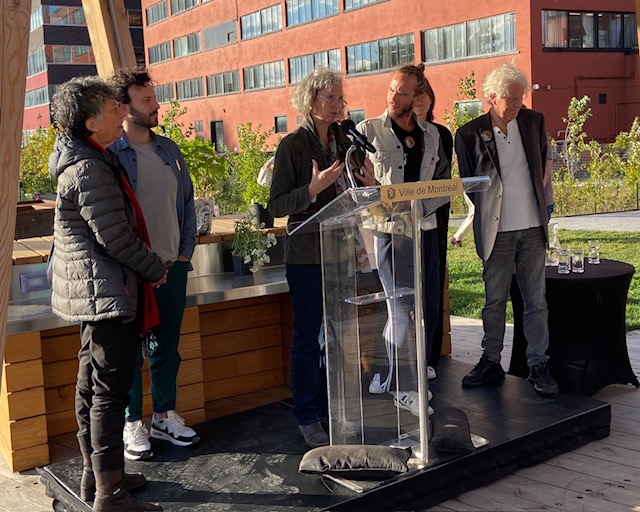
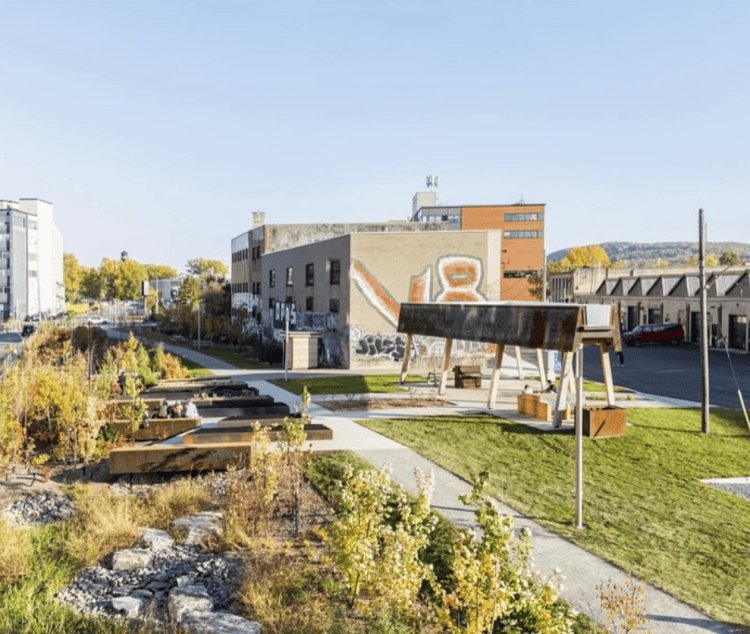
I discovered the abandoned railway link, calling it Gorilla Park and watched it grow over the years turning into an urban ‘oasis’ with jungle-like vegetation. It was one of our only greenspaces in Marconi-Alexandra. In 2011, the City of Montreal was consulting with the population in the surrounding areas that would likely undergo the most impact [from the MIL campus development]. I attended and pointed to a map where ‘Gorilla Park’ could become an official green space desperately needed to offset the heat-island effect. In 2012, real estate developers also wanted to convert a garment factory overlooking the oasis into high-end condos. Again, another consultation process began with the local residents. I wrote a brief with another resident and presented it to the OCPM (Montreal Public Consultation Office), underlining the need for a community greenspace. In May 2013, the wild urban jungle was brutally destroyed, which sparked an outcry and mobilization of local residents toward recovering our urban forest. Our group, Les AmiEs du Parc des Gorilles jumped through many hoops to arrive at what is now a jewel of biodiversity that will reassert its wildness back into the landscape. Parc des Gorilles was officially inaugurated on September 24, 2024. Incidentally, this day coincides with the International Day of the Gorilla!
2) What do you want your legacy to be?
Laughing! If I had to say a few words about this, I’d like to thank the BIG mystery, spirit-guide who helped early on and for years on how to evolve my social conscience and to bring out my ‘inner gorilla’ activist nature. I recall in my youth how forests were being slashed-and-burned to make way for cookie-cutter housing developments. As a 10 year-old, I felt helpless as I watched my wild playground vanish. I grieved those habitats destroyed for many species inside the forest; its biodiversity and the trees who in my child’s mind, seemed like friends. But more than that, I feel Gorilla Park became the ultimate creative experience. Having painted and done drawing throughout most of life, the act of persistence, dedication in helping to facilitate the planting a forest, becoming part of the creative fabric of my community is something I find hard to express in words – I am proud though not in a look at me way, but as someone giving back what was taken away when Gorilla Park was destroyed. As the years go by, eventually I won’t be here to see ‘my forest’ grow into maturity, feel its roots, be inspired by branch, leaf and trunk, but I do have a sense I’ll always be part of the trees, even though I won’t be in a physical body!
3) You had to fight to avoid being evicted despite having played a key role in securing a park that attracts attention beyond Montreal. What do planners and elected officials need to remember to keep city-builders like you in their city?
The whole eviction struggle was and is somewhat still painful even after 3 years, but we’re living peacefully in our spaces and that’s a very good place to be in! How strange after battling to ensure a green space in our community my neighbour and I, had to face another challenge to defend our home and studios. I made a conscious decision to stay in my space and fight. There were many who thought we should just take the buy-out, but the idea of leaving my home and studio as well as Gorilla Park wasn’t part of the overall plan. We were one [of] the first to arrive in our building over 30 years ago, so I guess having some history behind us helped. Since we were instrumental in shepherding Gorilla Park to completion, that added further fuel to propel us towards remaining firmly rooted in our spaces. My feeling is if the city invites the public to participate in various city improvements getting involved for the benefit of everyone’s quality of life and rights, then officials need to acknowledge how important people play in these local democratic exercises. There was also a back-story to the eviction that hinged upon a whiskey distillery installing itself inside our building. Fortunately, we discovered the notice for a public hearing on the project which got the community involved, and who were dead-set against an environmentally toxic project.
In December I reached out to Le Devoir, an influential French language newspaper who ran with our story on their front page! This began another round of David v. Goliath with the result, of a group of filmmakers approaching me to follow our story with a short documentary called: “Juste un toit – Losing your home” filmed in 2023. I was a little disappointed that our borough and the city didn’t take a more vocal stance during this period. A final push came when our MPP came to visit my studio then later posted on social-media about our plight. A few good photos and lines from someone in authority certainly helped to persuade the owner to back down in June 2023 and with the distillery being voted down by the local borough.
A few months later, I attended a press conference to pressure the government to lower the age of protection against eviction to age 65. Under the Françoise David law, those with low income and 10 years renting in the same space were protected from eviction. Those younger than 70 were not covered by this law. We had been seeing so many long-time renters being evicted that it seemed like another pandemic. A few weeks later, the CAQ government lowered the age to 65 and placed a moratorium on eviction.
My final thought is I am relieved and grateful the BIG spirit helped me so I can continue being a part of an historic replanting and watching the wilding of a piece of land that had been the source of so much fighting yet inspiration towards an environmentally durable site for everyone! Long Live Gorilla Park!!
You can visit Frances Foster’s website here: https://www.francesfoster.com/
Making the link: What do parks have to do with planning?
Ontario’s Provincial Planning Statement sets land use priorities for municipalities to follow across the province. There is green infrastructure in Gorilla Park to manage stormwater through water beds that are dry unless there is heavy rainfall. Green infrastructure is promoted under Section 2.9.1 Energy Conservation, Air Quality and Climate Change, which states: “Planning authorities shall plan to reduce greenhouse gas emissions and prepare for the impacts of a changing climate through approaches that:…d) promote green infrastructure, low impact development, and active transportation, protect the environment and improve air quality”.
